Listen (4:09)
January 19, 2026
I was fortunate to have been taught sentence diagramming from an early age, not realizing at the time that music, another language I had just begun to explore, could be analyzed in a similar way. The lifelong geek-out, now well afoot in the analysis of both words and music, had not yet emerged as one of a handful of spark moments in my life, those unplanned, transformative instances that reveal a deeper purpose. In this case, the flickering light, the newness of the reaction, began to slowly illuminate and elucidate the shared music in my two favorite forms of expression.
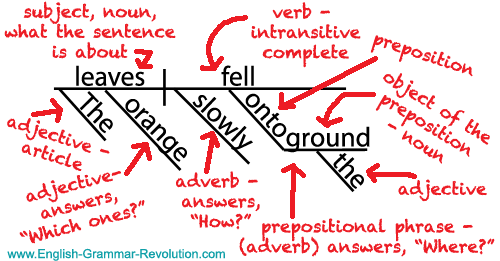
Harmonic and melodic analysis are akin to sentence diagramming because both involve breaking down a line, whether in speech or music, into functional parts and showing how its elements connect to express meaning. Each discipline turns an intuitive experience, such as speaking a sentence or hearing a phrase, into a clearly organized structure, making these relationships more straightforward to identify.
Both practices employ a traditional visual approach: lines and branches in grammar; brackets, Roman numerals, and contour markings in music theory, to illustrate the structure. Sentence diagramming highlights grammatical roles—subject, predicate, modifiers, objects—beyond simply categorizing word types. Harmonic and melodic analysis emphasizes functions—tonic, predominant, dominant, motive—rather than focusing solely on chord names or intervals.
Harmonic functions in music theory correspond to grammatical roles in sentences via similar structural hierarchies. In this correlation, the tonic functions as a subject (establishing stability and identity), the subdominant as a modifier or indirect object (adding expansion or preparation), and the dominant as a predicate or direct object (introducing tension and pushing toward resolution).
The tonic, as the subject, establishes the core “who” or “what” of the phrase, anchoring the harmonic framework, much as a subject identifies the main entity in a sentence. It also begins and ends phrases, mirroring the way subjects frame declarative sentences to ensure coherence.
The subdominant, as the modifier, elaborates or transitions away from the tonic, akin to adjectives, adverbs, or indirect objects that add detail without resolving action. This preparatory role builds expectancy, much like modifiers that nest under the main clause, enriching meaning.
The dominant, acting as the predicate, creates forward movement and tension, similar to a verb phrase or a direct object that pushes the sentence toward completion. It requires resolution back to the tonic, much like predicates connect subjects to outcomes through cadences that resemble sentence endings.
One of the many things I cherish about teaching music and music theory is that there are times when the over-jargoned, often colonialist, rule-laden patter pushes back against the aim of understanding a piece of music, and the same goes for the written word. In both cases, the ear must be the final arbiter. Martin Amis once said he would refine and revise a sentence read aloud “until there was nothing wrong with it,” of course, content in his own mind with what the right sound should be.
That grade-school spark that flickered into flame all those decades ago is, I am quite happy to report, still a well-tended fire in my heart and in both hemispheres of my restless brain. Focusing on abstract structures or compositional procedures reveals craft, and that’s what I’m after these days: an appreciation of how a piece of music or writing is actually heard.
Looking back on my good fortune of discovery all those decades ago, grappling with bar chords and diagramming “The bird sings,” I’m realizing that a renewed synthesis is crystallizing now, forged by devoted teachers for whom I am ever grateful. Analysis and creativity can work in tandem; they can light up both sides of the brain for different reasons at different times, a Promethean notion worth savoring.